Pacemakers
A pacemaker is a small device placed under the skin below the collarbone that stops the heart from beating too slowly.
Read the guideAn ICD (implantable cardioverter-defibrillator) watches the heart rhythm and can treat a dangerous fast rhythm with pacing or a shock. A CRT device paces both sides of a weakened heart so they beat together. Dr Shady Habboush, a certified cardiac device specialist (DGK), implants and follows up both at Saudi German Hospital Dubai.
Risks are similar to a pacemaker, including bleeding, infection and lead problems; CRT implants also carry a chance that the left ventricular lead cannot be placed. An ICD can occasionally give a shock that was not needed. Not everyone responds to CRT. Heart failure medicines remain essential with either device, and the decision is made with you.
Assessment includes an ECG, an echo to measure heart pumping and a review of your medicines.
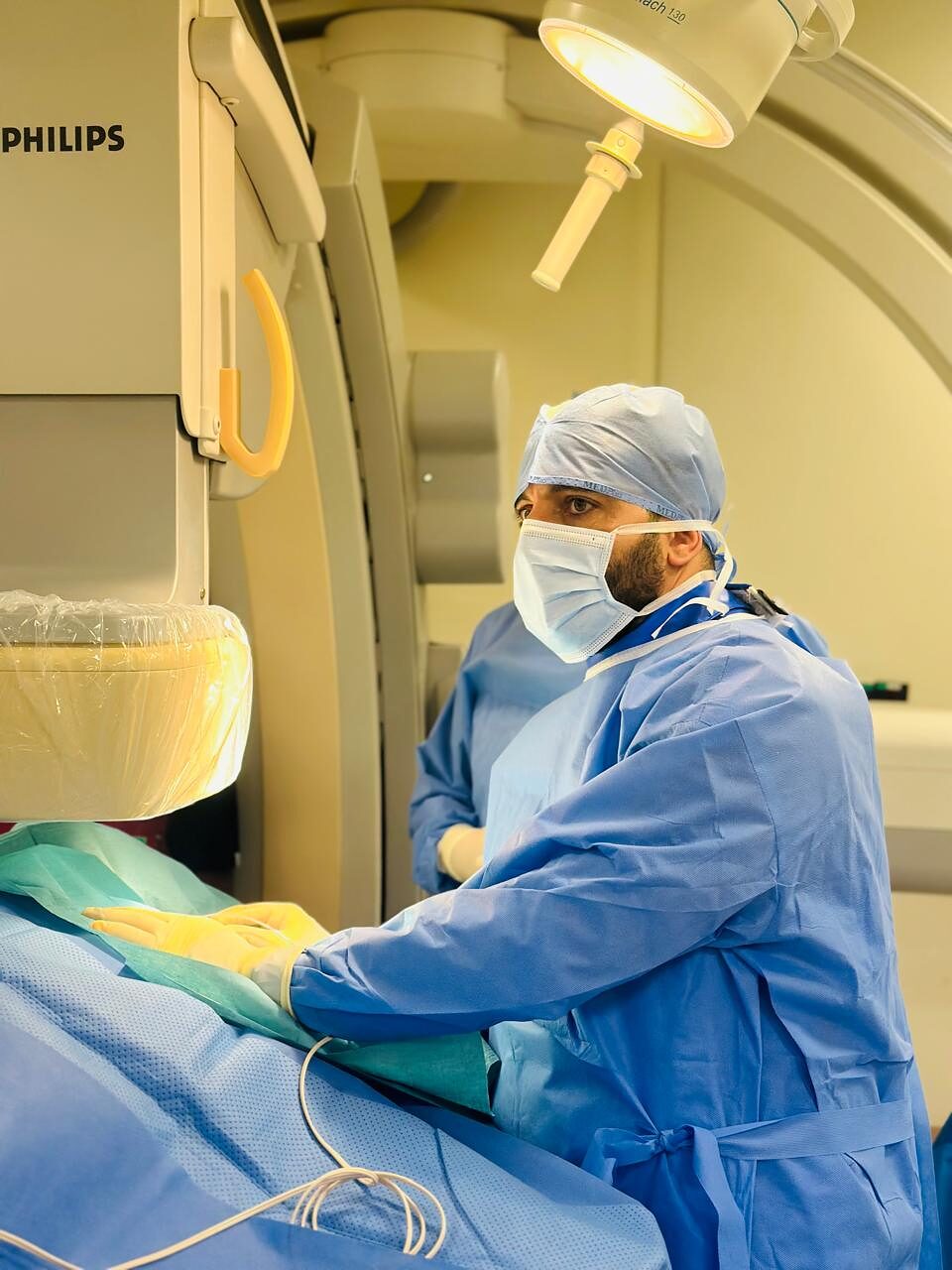
The device is implanted under the collarbone under local anaesthetic, with sedation, similar to a pacemaker.
Leads are placed in the heart through a vein; a CRT device has an extra lead for the left ventricle.
The device is tested and programmed. A CRT implant often takes longer than a standard pacemaker.
Recovery is similar to a pacemaker: arm restrictions for a few weeks and regular device checks, often with remote monitoring.
After an ICD, driving rules are stricter and depend on why it was fitted. You will be told what applies to you.
If an ICD shock occurs, follow the plan your device team gives you. Call 998 if you feel unwell after a shock or have more than one shock.
| ICD | CRT | |
|---|---|---|
| Main job | Detects and treats dangerous fast rhythms | Coordinates the pumping of both ventricles |
| Who it is for | High risk of sudden cardiac arrest | Heart failure with a weak heart and wide QRS |
| Can it shock? | Yes | Only if it is a CRT-D (CRT with defibrillator) |
| What you may notice | Usually nothing; a shock if a dangerous rhythm occurs | Often less breathlessness over time, if you respond |
A pacemaker treats a slow heart rate. An ICD also treats dangerous fast rhythms, if needed with a shock. Most ICDs can pace as well.
People describe a sudden thump or kick in the chest lasting a moment. It can be uncomfortable. Many people with an ICD never receive a shock.
Many people with the right ECG pattern breathe more easily and feel less tired over time, but not everyone responds. Your team will review this at follow-up.
Many current systems are MRI-conditional. The device team must check and prepare the device before any scan.
A pacemaker is a small device placed under the skin below the collarbone that stops the heart from beating too slowly.
Read the guideA leadless pacemaker is a self-contained pacemaker about the size of a large vitamin capsule that is placed inside the heart through a vein in the leg.
Read the guidePalpitations are an awareness of your own heartbeat: racing, fluttering, skipping or pounding.
Read the guideMedical facts on this page follow the sources below.
Medically reviewed against ESC and NHS guidance · Updated October 2026. General information, not medical advice.
Appointments are made through Saudi German Hospital Dubai, Hessa Street, Al Barsha 3. Consultations in Arabic, English and German.
Chest pain right now? Do not wait for an appointment. Call 998 or go to the nearest emergency department.