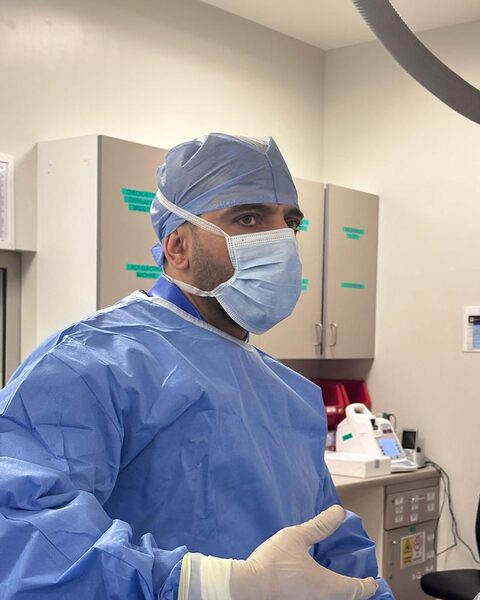
Pacemakers
A pacemaker is a small device placed under the skin below the collarbone that stops the heart from beating too slowly.
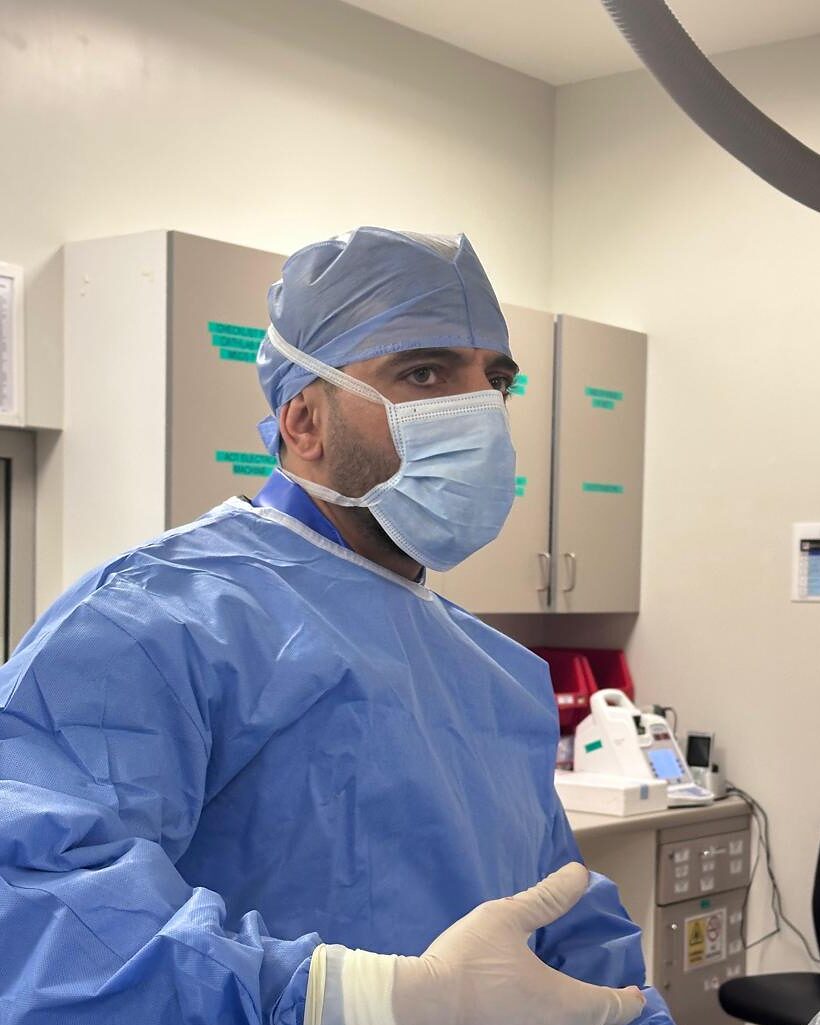
Read the guideA leadless pacemaker is a self-contained pacemaker about the size of a large vitamin capsule that is placed inside the heart through a vein in the leg. It has no leads and no pocket under the skin. Dr Shady Habboush places leadless pacemakers at Saudi German Hospital Dubai for patients in whom it is a suitable option.
Leadless pacemakers avoid lead and pocket problems, but they carry their own risks, including bleeding or damage to the leg vein, the device moving, and rarely a tear in the heart wall that needs urgent treatment. Long-term experience is shorter than with conventional pacemakers. A conventional pacemaker remains the standard option for many people, and the choice is discussed with you.
The suitability check includes an ECG, rhythm monitoring and often an echo.
A vein at the top of the leg (femoral vein) is numbed with local anaesthetic, and sedation may be offered.
A delivery catheter carries the device up the vein into the right ventricle under X-ray.
The device is fixed to the heart wall and tested before the catheter is withdrawn.
The leg puncture is closed, and you rest lying flat for a few hours.
Many people go home the same day or the next day. There is no chest wound and no pocket, so there are usually no arm movement restrictions.
Device checks are needed regularly, as with any pacemaker.
The device is designed to stay in place. When the battery runs low, a new device can often be added, or in some cases the old one retrieved.
A pacemaker in a small capsule that sits inside the heart. It has no wires and no pocket under the skin.
It suits some patients but not all. It is mainly used when pacing from one chamber is enough. Dr Shady can explain whether it is an option for you after reviewing your ECG and tests.
Only a small puncture mark at the top of the leg. There is no scar on the chest.
Neither is better for everyone. A leadless pacemaker avoids leads and a pocket; a conventional pacemaker suits more types of rhythm problem and has the longer track record. The right choice depends on your rhythm problem.
A pacemaker is a small device placed under the skin below the collarbone that stops the heart from beating too slowly.
Read the guideBradycardia means a slow heart rate, usually below 60 beats a minute at rest.
Read the guideAn ICD (implantable cardioverter-defibrillator) watches the heart rhythm and can treat a dangerous fast rhythm with pacing or a shock.
Read the guideMedical facts on this page follow the sources below.
Medically reviewed against ESC and NHS guidance · Updated October 2026. General information, not medical advice.
Appointments are made through Saudi German Hospital Dubai, Hessa Street, Al Barsha 3. Consultations in Arabic, English and German.
Chest pain right now? Do not wait for an appointment. Call 998 or go to the nearest emergency department.